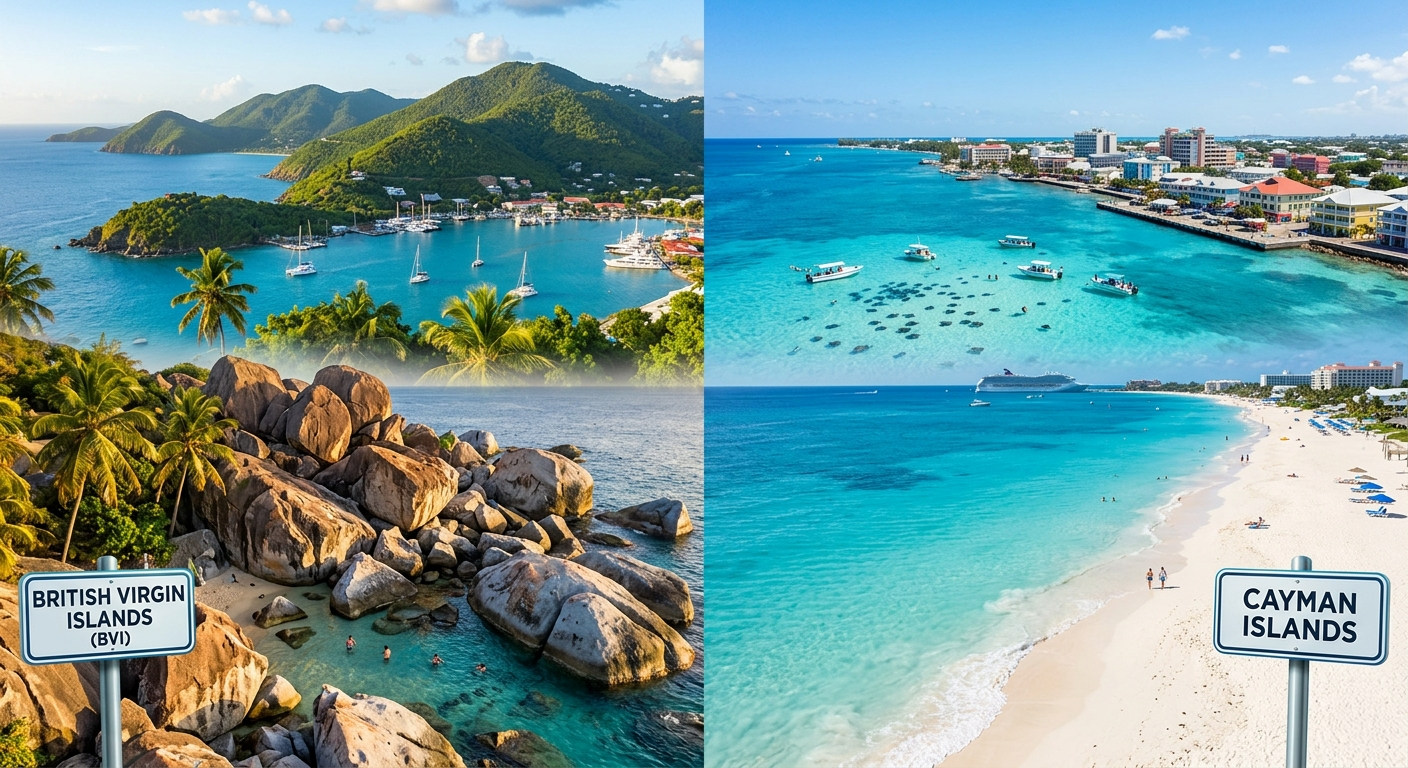
If you are choosing between BVI vs Cayman Islands for a holding company, you are not alone. These are the two most used offshore jurisdictions in the world, and for good reason. Both offer tax neutrality, privacy, and flexibility. But they are not the same thing, and the wrong choice can cost you more money, more paperwork, and more headaches than you expect.
This guide breaks down the real differences between BVI and Cayman Islands in plain language, covering costs, compliance requirements, and how each jurisdiction is perceived by banks, investors, and regulators. If you are doing an offshore jurisdiction comparison in 2026, this is the most practical starting point.
Key Takeaways
- BVI is cheaper to set up and maintain, making it the default choice for most holding companies.
- Cayman Islands costs significantly more but carries stronger credibility with institutional investors and private equity.
- Both jurisdictions now have economic substance requirements for certain in-scope activities.
- Neither BVI nor Cayman is a good fit if your activity triggers substance rules without the infrastructure to support them.
- Your banking setup, investor expectations, and long-term structure goals should drive the decision, not just the setup cost.