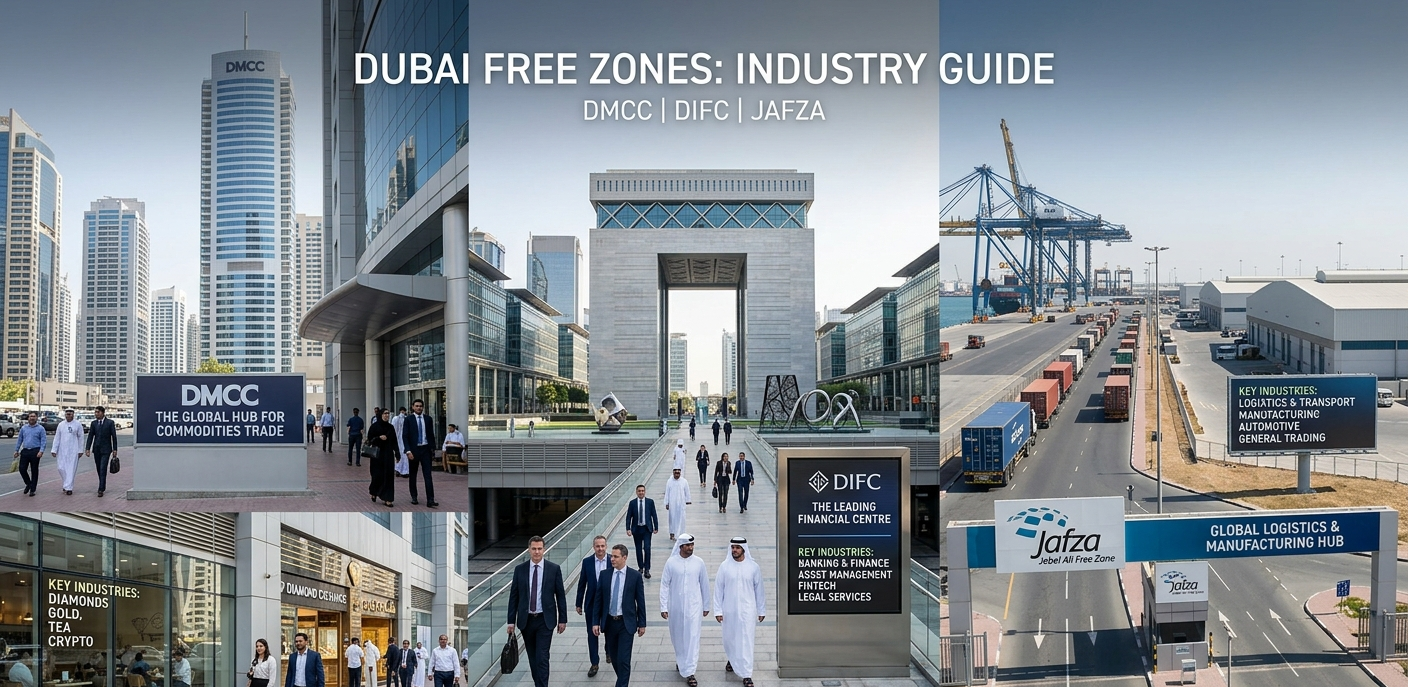
UAE Corporate Tax at 9%: Free Zone Exemptions, Qualifying Income, and What Actually Gets Taxed

14 May 2026

The UAE corporate tax at 9% applies to businesses earning above AED 375,000 in net profit. But if your business is registered in a UAE free zone, the rules are different. Free zone companies can qualify for a 0% tax rate on what the law calls qualifying income. Understanding exactly what qualifies, and what does not, is what determines your actual tax bill.

At a Glance

  • The UAE corporate tax rate is 9% on net profits above AED 375,000. Businesses earning less than this threshold pay 0%.
  • Free zone companies are not automatically exempt. They must meet specific conditions to qualify for the 0% rate.
  • Qualifying income refers to income earned from approved activities, mainly with other free zone businesses or outside the UAE.
  • Income from UAE mainland clients usually does not qualify for the exemption and is taxed at 9%.
  • If a free zone company fails the qualifying conditions, the entire entity can lose its preferential tax status.
  • Getting the structure right from the start prevents costly corrections later.

What Is UAE Corporate Tax and Who Does It Apply To?

UAE corporate tax is a federal tax on business profits introduced under Federal Decree-Law No. 47 of 2022. It applies to all businesses and individuals conducting commercial activity in the UAE. The standard rate is 9% on taxable income above AED 375,000. Profits at or below this threshold are taxed at 0%.

This tax became effective for financial years starting on or after 1 June 2023. So if your business follows a January to December financial year, UAE corporate tax applied from 1 January 2024.

The Federal Tax Authority (FTA) administers UAE corporate tax, just as it administers VAT. All businesses with taxable income must register, file returns, and pay tax on time. There are no exceptions to the registration requirement, even for free zone companies.

Do Free Zone Companies Pay Corporate Tax in UAE?

This is the most common question we hear. The short answer is: it depends. Free zone companies are not automatically exempt from UAE corporate tax. They can qualify for a 0% rate on qualifying income, but only if they meet all the conditions set by the law.

To benefit from the 0% free zone tax rate, your company must:

  • Be registered in a qualifying UAE free zone (most major free zones qualify)
  • Maintain adequate substance in the UAE, meaning real staff, office space, and operations
  • Earn income only from qualifying activities
  • Not elect to be treated as a regular taxable person
  • Keep financial records that separate qualifying and non-qualifying income
  • Meet the de minimis requirement: non-qualifying revenue must stay below 5% of total revenue or AED 5 million, whichever is lower

If a company fails any of these conditions, it is treated as a regular taxable person and pays 9% corporate tax on all profits above AED 375,000. The exemption is not partial. You either qualify or you do not.

What Is Qualifying Income Under UAE Corporate Tax?

Qualifying income under UAE corporate tax refers to income earned by a free zone company from approved activities and approved counterparties. It is the income that is eligible for the 0% corporate tax rate.

Income is generally considered qualifying if it comes from:

  • Transactions with other free zone persons (other free zone companies)
  • Export of goods or services outside the UAE
  • Income from approved intellectual property assets
  • Headquarters and holding company income that meets specific conditions
  • Treasury and financing activities within a corporate group

The FTA publishes a list of qualifying activities. These broadly cover manufacturing, processing, logistics, financial services, distribution in or from a designated zone, professional services to free zone persons, and wealth management services. If your business activity is not on this list, the income it generates may not be qualifying income.

Dubai Company Setup

Which Dubai Free Zone Activities Are Exempt From the 9% Tax?

Dubai free zone tax exemption rules apply when a company carries out qualifying activities and earns qualifying income. The exemption is not based simply on being in a free zone. It is based on what you do and who you do it with.

Activities that typically qualify for the 0% rate:

  • Manufacturing or processing of goods within the free zone
  • Trading of goods within designated zones (important distinction from mainland trading)
  • Fund management, reinsurance, and certain financial services
  • Logistics and distribution services provided to free zone clients or overseas clients
  • Back-office or support services provided to a group company
  • Professional services provided exclusively to other free zone businesses

Activities that do NOT qualify and are taxed at 9%:

  • Services provided to UAE mainland clients
  • Selling goods directly to end consumers in the UAE mainland
  • Business activities not listed as qualifying under Cabinet Decision No. 55 of 2023
  • Income from immovable property located in the UAE mainland
  • Any income earned while failing the substance or de minimis conditions

Free Zone vs Mainland: How the Tax Treatment Differs

One of the biggest misunderstandings in UAE corporate tax planning is treating free zone and mainland businesses as if they have the same tax exposure. They do not.

Factor Free Zone Company Mainland Company
Tax rate on qualifying income 0% 9% above AED 375k
Tax rate on non-qualifying income 9% 9% above AED 375k
Substance requirements Yes, mandatory Standard compliance
Ability to sell to mainland Limited, may lose exemption Unrestricted
CT registration required Yes Yes

If your free zone business serves both free zone clients and mainland clients, you need to track income by source. Once your mainland or non-qualifying income exceeds the de minimis threshold, your entire company becomes a regular taxable person for that tax period.

Common Mistakes Free Zone Businesses Make With Corporate Tax

Many businesses set up in free zones expecting automatic tax savings, without understanding that the conditions must be actively maintained. Here are the mistakes we see most often:

  • Assuming free zone means tax free: The 0% rate only applies to qualifying income. Any non-qualifying income is taxed at 9%.
  • Ignoring substance requirements: You need real operations in the UAE. A virtual office and a dormant company are not enough.
  • Mixing mainland and free zone clients carelessly: Serving mainland clients is fine, but once it crosses the de minimis limit, you lose the exemption for the whole year.
  • Not registering for corporate tax: Registration is mandatory for all businesses, even if your tax is zero. Late registration carries penalties.
  • Poor bookkeeping: If you cannot clearly separate qualifying from non-qualifying income, the FTA will treat all your income as taxable.

Getting Your UAE Corporate Tax Structure Right

UAE corporate tax planning is not just about where you register. It is about how your business operates, who your clients are, what activities you carry out, and how you maintain records. Many businesses discover issues only after their first tax filing, which is not the right time to find out.

At CSG Advisory, we work with free zone businesses, holding structures, and cross-border companies to assess their current setup, identify qualifying income correctly, and ensure they meet FTA compliance requirements. Whether you are setting up for the first time or reviewing an existing structure, getting clear on your tax position early makes a material difference.

You can learn more about our UAE tax and accounting services at.

The Bottom Line

UAE corporate tax at 9% does not automatically apply to every free zone business. But the exemption is conditional, and those conditions have to be maintained consistently. Qualifying income under UAE corporate tax is a defined concept, not a general principle. Dubai free zone tax exemption rules reward businesses that are genuinely structured and operating within the qualifying framework.

If you are not sure whether your current free zone setup qualifies, or if you are planning a structure and want to get it right from the start, talk to a qualified advisor before your first tax year closes.

Dubai Company Setup

Frequently Asked Questions (FAQs)

Do free zone companies pay corporate tax in UAE?

Yes, free zone companies are subject to UAE corporate tax. However, they can qualify for a 0% rate on qualifying income if they meet all the required conditions. This includes maintaining substance in the UAE, earning income only from qualifying activities, and staying within the de minimis threshold for non-qualifying revenue. Free zone companies that do not meet these conditions are taxed at the standard 9% rate.

What is qualifying income under UAE corporate tax?

Qualifying income under UAE corporate tax refers to income earned by a free zone company from qualifying activities and qualifying counterparties. It typically includes income from other free zone businesses, export income, approved financial services, and certain intellectual property income. Income that does not meet these criteria is non-qualifying and taxed at 9%.

Which Dubai free zone activities are exempt from the 9% tax?

Activities listed under Cabinet Decision No. 55 of 2023 are generally exempt. These include manufacturing, logistics, fund management, reinsurance, treasury services, and professional services to other free zone entities. Activities not on this list, especially services to mainland UAE clients, are not exempt and attract 9% corporate tax.

Can a free zone company sell to UAE mainland clients?

Yes, but with a significant tax consequence. Income from mainland UAE clients is generally non-qualifying income and is taxed at 9%. If this non-qualifying income exceeds 5% of total revenue or AED 5 million, the entire company loses its qualifying free zone status for that tax year and all income becomes taxable at 9%.

What happens if a free zone company fails the qualifying conditions?

If a free zone company fails any of the qualifying conditions in a given tax year, it is treated as a regular taxable person for that entire year. This means all net profits above AED 375,000 are taxed at 9%, not just the non-qualifying portion. The company can potentially requalify in future years if it corrects the issue.

Latest Insights

Explore our latest insights and expert advice on international business registration, compliance, and global expansion strategies.