DMCC vs DIFC vs JAFZA: The Dubai Free Zone by Industry Type Guide

09 May 2026

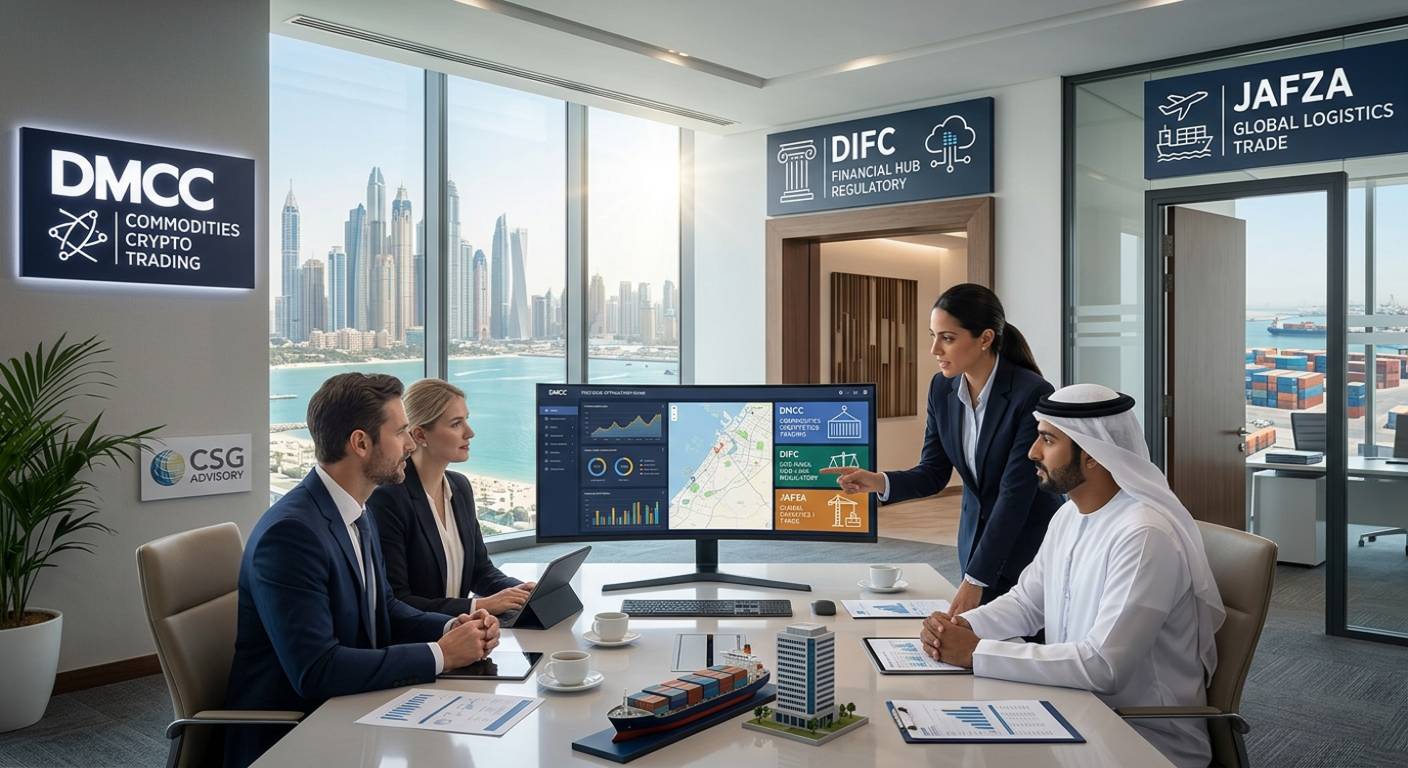
If you are doing a DMCC vs DIFC vs JAFZA comparison, you are already asking the right question. Dubai has over 30 free zones, but these three are where most serious businesses end up. Each one is built for a different kind of business, and the best Dubai free zone for trading, finance, or logistics depends entirely on your industry type. Choosing the wrong one can mean higher costs, licensing restrictions, or banking problems down the road. Here is a plain-English breakdown of how they differ and which Dubai free zone by industry type makes the most sense for you.

At a Glance

  • DMCC is Dubai’s largest free zone and is ideal for trading, commodities, and multi-activity businesses.
  • DIFC is a regulated financial hub, best for finance, fintech, legal, and professional services.
  • JAFZA is built for logistics, manufacturing, import-export, and businesses that need physical warehousing.
  • The best Dubai free zone for your business depends on your industry type, not just the setup cost.
  • Getting the structure right from the start saves time, money, and compliance headaches later.

Dubai Free Zone by Industry Type: A Quick Reference

Before comparing DMCC, DIFC, and JAFZA in detail, here is how they map to the most common industry types. This is the fastest way to narrow down your options.

  • Trading, commodities, crypto, multi-activity: DMCC
  • Finance, fintech, funds, legal, consulting: DIFC
  • Logistics, manufacturing, import-export, warehousing: JAFZA
  • Tech startups, agencies, service businesses: DMCC or IFZA (lower cost alternatives worth comparing)

Now here is what each of these zones actually is and how they work.

What Are DMCC, DIFC, and JAFZA?

These three are free zones, meaning they are special economic areas where foreign investors can own 100% of their company without needing a local UAE partner. Each free zone has its own regulator, license types, and rules.

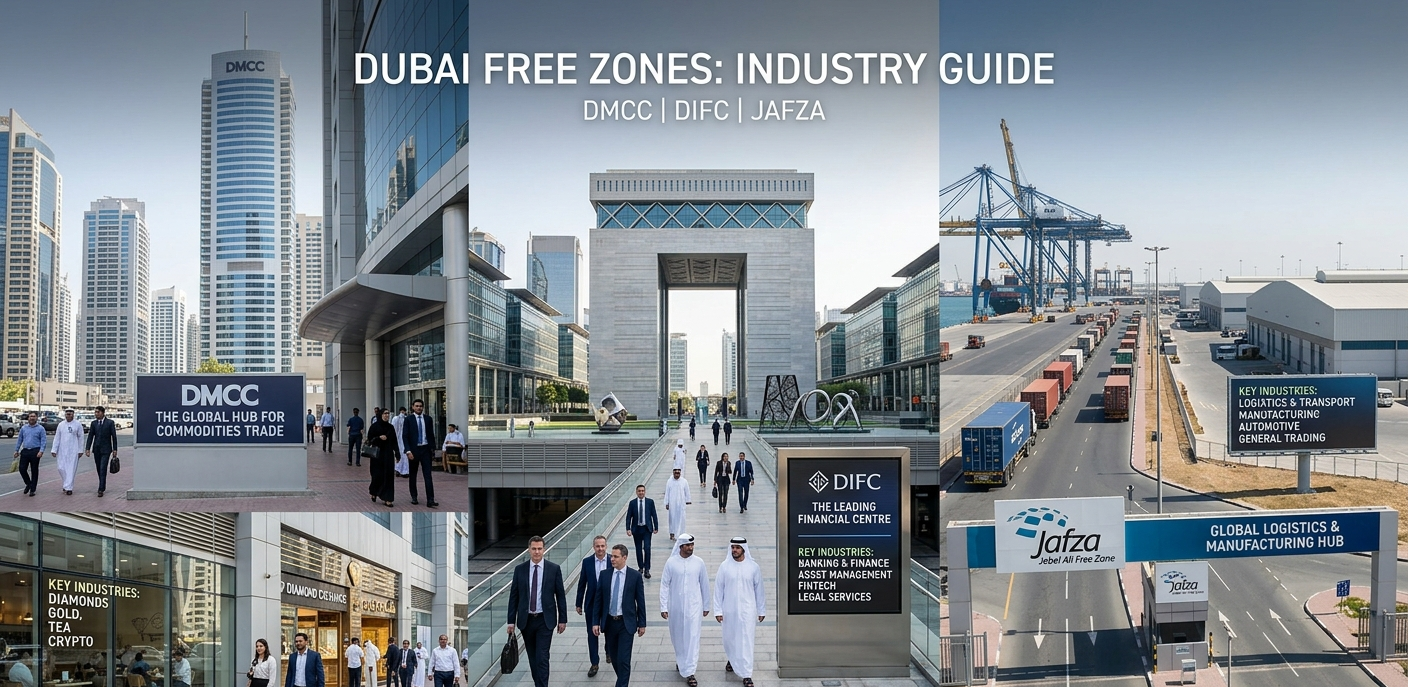
DMCC (Dubai Multi Commodities Centre) refers to Dubai’s largest free zone by number of registered companies. It is designed for commodity trading, crypto assets, precious metals, tea, coffee, and a wide range of general trading and service activities.

DIFC (Dubai International Financial Centre) is a globally recognised financial hub regulated by the Dubai Financial Services Authority (DFSA). It is the jurisdiction of choice for banks, asset managers, family offices, legal firms, and fintech companies operating under international regulatory standards.

JAFZA (Jebel Ali Free Zone Authority) is one of the oldest and largest free zones in the world by trade volume. It sits next to Jebel Ali Port, the busiest port in the Middle East, making it the top choice for logistics, manufacturing, distribution, and heavy trading businesses.

DMCC vs DIFC vs JAFZA Comparison: Cost, Visas, Banking, and Tax

Here is the full DMCC vs DIFC vs JAFZA comparison across the factors that matter most, including which is the best Dubai free zone for trading, finance, and logistics.


Factor DMCC DIFC JAFZA
Best For Commodities, crypto, multi-commodity trading Finance, fintech, legal, consulting Logistics, manufacturing, heavy trading
Setup Cost (approx) AED 15,000 to 50,000+ AED 30,000 to 80,000+ AED 15,000 to 45,000+
Visa Eligibility Up to 6 visas (flexible) Based on office size Based on warehouse/office
Banking Strong, global options Premium, regulated Trade-focused, good access
Tax Framework 0% corporate tax (if qualifying) 0% in free zone, full regulatory oversight 0% corporate tax
Key Regulator DMCC Authority DFSA (Dubai Financial Services Authority) JAFZA Authority
Ideal Client Traders, holding companies Banks, funds, advisors Importers, exporters, manufacturers
Dubai Company Setup

Which Dubai Free Zone Is Best for a Trading Company?

For most trading businesses, DMCC is the top choice. It is built around commodity trading and offers more than 600 permissible business activities under a single trade license. You can trade physical goods, digital assets, and commodities all under one entity.

That said, the answer depends on what you are trading and how you plan to operate.

  • Physical goods, import-export, distribution: JAFZA is better because of port access, customs integration, and warehouse facilities.
  • Commodities, precious metals, crypto trading: DMCC has a dedicated commodity ecosystem and is globally recognised for this.
  • Financial instruments, structured products, fund management: DIFC is the only jurisdiction in Dubai where you can get regulated to operate as a fund, broker, or investment manager.

What Is DIFC Best For? Finance, Fintech, and Professional Services

DIFC is in a different category from DMCC and JAFZA. It operates under its own legal system, which is based on English common law, with its own courts. This matters enormously for regulated financial businesses.

If you are setting up a fintech company, a family office, an asset management firm, a law firm, or a corporate advisory practice that works with institutional clients, DIFC is almost always the right answer. Here is why:

  • DIFC is recognised by global regulators including the UK FCA, US SEC, and others as a trusted jurisdiction.
  • Contracts governed under DIFC law are enforceable globally, which matters for cross-border deals.
  • The DFSA (Dubai Financial Services Authority) provides a regulated framework for fintech licensing, including the DIFC’s own Innovation Testing Licence.
  • Premium banking access is significantly easier for DIFC-registered entities.

The trade-off is cost. DIFC is the most expensive of the three to set up and maintain. It is not the right choice for small businesses or those in early startup stages without substantial funding or institutional backing.

For fintech startups that are not yet ready for DIFC, DMCC or even RAK free zones can be a practical first step. Learn more about how we approach company registration across UAE free zones at CSG Advisory.

Which Free Zone in Dubai Is Cheapest for a Tech Startup?

None of these three is designed to be the cheapest option in Dubai. If cost is your primary concern, you should also look at IFZA, RAKEZ, or Meydan free zones, which offer lower setup fees.

Among the three being compared here, DMCC and JAFZA are in a similar price range, while DIFC is significantly more expensive.

For a tech startup specifically:

  • DMCC works if you need a multi-activity license covering tech, consulting, and trading under one entity.
  • DIFC makes sense only if you are a regulated fintech or need credibility with institutional investors and banks.
  • JAFZA is rarely the right fit for a pure tech startup with no physical goods or logistics component.

The more useful framing is not which is cheapest, but which one avoids the most expensive mistake. Setting up in the wrong free zone can force a restructure later, which costs more than getting it right the first time.

How to Pick the Right Dubai Free Zone for Your Industry

Here is a practical decision framework you can use before you register anywhere.

Step 1: Define your primary business activity

Your license type determines everything else. UAE free zones tie your license to specific permitted activities. If your activity list does not match the free zone’s offering, you will either face restrictions or need multiple entities.

Step 2: Check if your activity requires regulation

Financial services, investment management, and certain fintech activities are regulated in the UAE. Only DIFC (under DFSA) and ADGM (in Abu Dhabi) offer the regulatory framework for these. Running a regulated financial activity without the right license creates serious legal exposure.

Step 3: Assess your physical requirements

Do you need warehouse space, port access, or a physical trading floor? JAFZA is unmatched for that. Do you just need a flexi-desk and corporate registration? DMCC offers both affordably.

Step 4: Think about banking

Corporate banking in the UAE has become more selective since 2022. DIFC-registered entities generally have the easiest access to international banks. DMCC entities have good access too, especially for trade finance. JAFZA works well for trade banking with major local banks like Emirates NBD and Mashreq.

Step 5: Plan for tax

Under the UAE’s corporate tax law effective from 2023, free zone entities can qualify for 0% corporate tax if they earn qualifying income and meet specific conditions. Both DMCC and JAFZA entities can be structured to qualify. DIFC operates under its own regime with similar 0% benefits for qualifying activities. Getting this planning wrong is an expensive fix. This is where early advisory guidance matters most.

Not Sure Which Free Zone to Pick? Here Is What We Suggest.

Choosing between DMCC, DIFC, and JAFZA is not a decision you should make based on cost alone. The right free zone depends on your business model, your clients, your regulatory needs, and your long-term expansion plan.

At CSG Advisory, we help founders and businesses structure correctly from day one, whether that means a DMCC trading setup, a DIFC-regulated entity, or a JAFZA logistics operation. Our team has worked across UAE mainland, all major free zones, and cross-border structures spanning Europe, Asia, and offshore jurisdictions. Visit csgadvisory.com to learn more about our company registration services or to book a consultation.

The Bottom Line on DMCC vs DIFC vs JAFZA

The DMCC vs DIFC vs JAFZA comparison is really a question about what your business does and who it serves. DMCC offers flexibility and scale for trading and services. DIFC offers credibility and regulatory infrastructure for financial businesses. JAFZA offers unmatched access to global trade and logistics.

Pick the one that matches your activity first. Then layer in cost, visa needs, and banking access. If you are still unsure, the right advisory team can walk you through the options and help you avoid a structure that looks fine on paper but creates problems at the operational level.

Ready to set up in Dubai?Talk to CSG Advisory about the right free zone for your business.

Dubai Company Setup

Frequently Asked Questions (FAQs)

Which Dubai free zone is best for a trading company?

For most trading businesses, DMCC is the best starting point because it supports the widest range of trading activities under one license. If you need port access and warehousing, JAFZA is better. For financial instrument trading, only DIFC provides the regulated framework you need.

What is the difference between DMCC and DIFC?

DMCC is a general-purpose free zone focused on commodities, multi-activity trading, and business services. DIFC is a regulated financial hub with its own legal system, courts, and regulator (the DFSA). DIFC is for financial services, funds, and regulated fintech. DMCC is for everyone else who wants maximum flexibility.

Which free zone in Dubai is cheapest for a tech startup?

Among the three, DMCC is typically the most affordable. But if cost is the main priority, look at IFZA, RAKEZ, or Meydan free zones, which have lower base fees. The better question is which free zone fits your activity and growth plan, not which has the lowest sticker price.

Can I set up a holding company in DMCC or DIFC?

Yes. Both DMCC and DIFC are commonly used for holding company structures. DIFC is particularly popular for family offices and investment holding entities due to its legal framework and international recognition. DMCC holding entities work well for operational businesses with regional subsidiaries.

Do I need a physical office in JAFZA?

JAFZA requires a registered address at minimum, and businesses with warehouse or logistics operations need physical space. For pure trading or services companies, JAFZA offers flexi-desk and small office options, but it is not as flexible on this point as DMCC. If you do not need port or warehouse access, JAFZA may not be the right fit.

Latest Insights

Explore our latest insights and expert advice on international business registration, compliance, and global expansion strategies.